



Pitsch am Bach
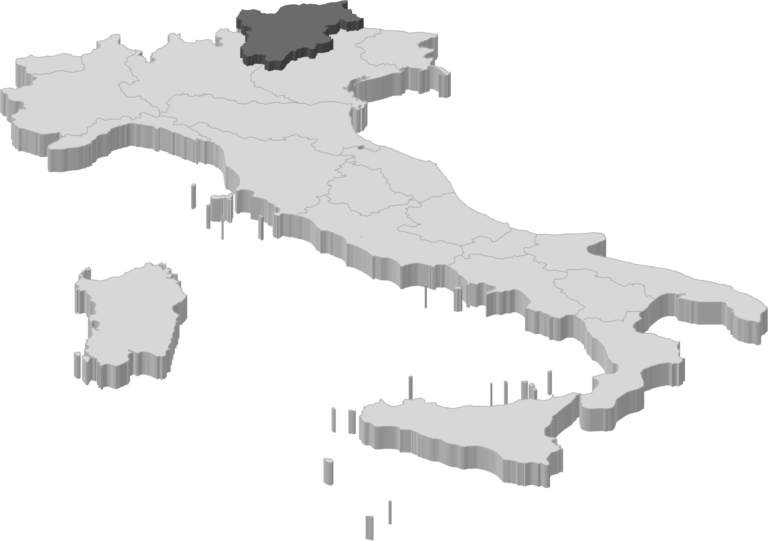
Pitsch am Bach is located near Bolzano on the south-western slopes of the hills between Santa Giustina and the picturesque wine village of Santa Maddalena—one of South Tyrol’s most historic and renowned wine-growing areas of Trentino Alto-Adige. The wines here are traditionally made from Schiava with a small percentage of Lagrein. The designation has been protected since 1923 and recognized as a DOC since the 1970s.
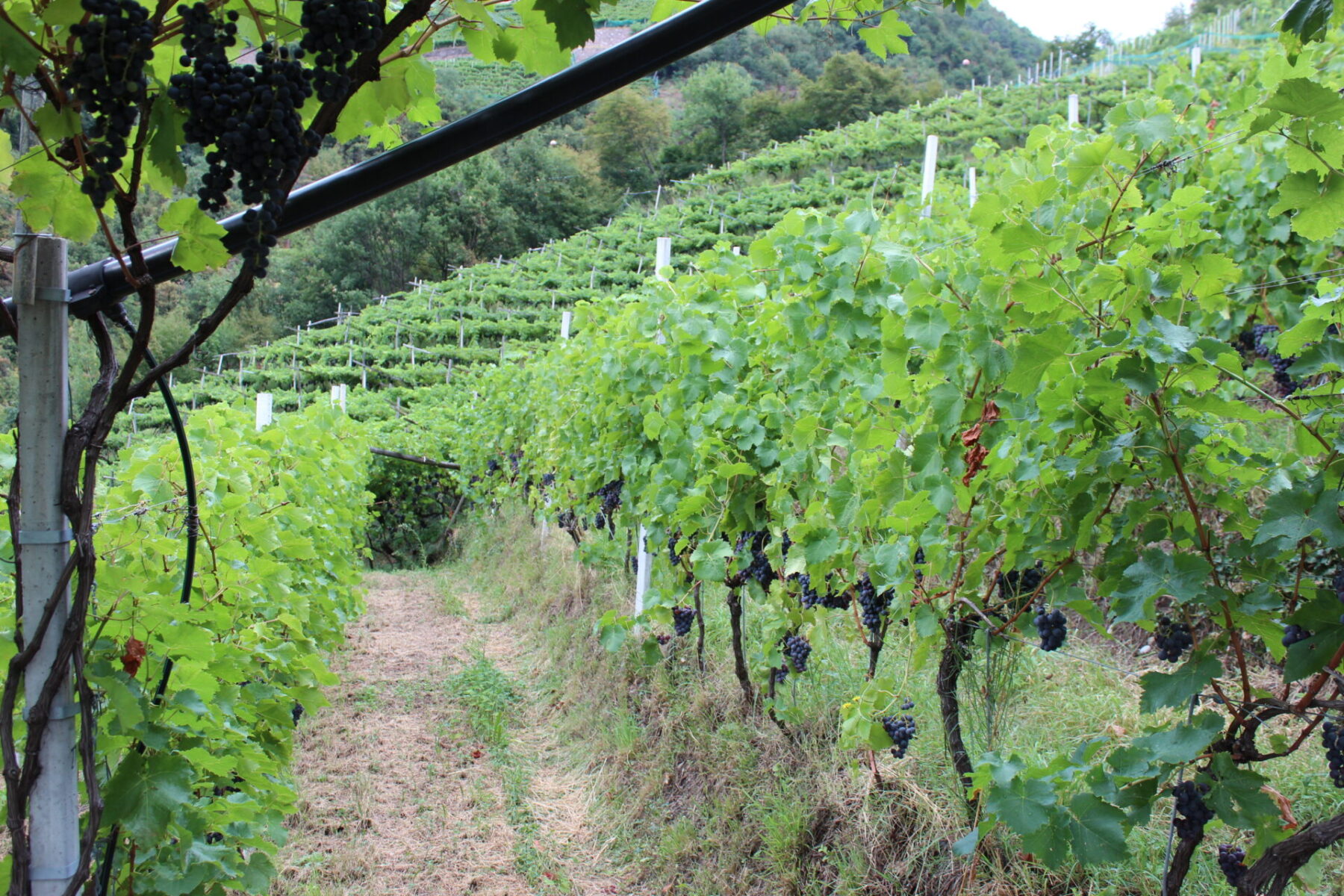
The vineyards sit at around 300 meters above sea level on dry alluvial gravel soils with high sand and moderate humus content—ideal conditions for viticulture. The area benefits from approximately 300 days of sunshine per year, contributing to optimal grape ripening.
The “maso,” a typical rural farmstead of Trentino-Alto Adige, historically a self-sufficient, family-based production unit, was first mentioned in a document from 1350 as the property of a banker from Florence named Boccia whose original Italian name, unusual for South Tyrolean tongues, was gradually adapted over the centuries until “Boccia” became “Pitsch.” Because of its location beside the Rivelaun stream, the name “Pitsch am Bach” (“Pitsch by the stream”) was born. The family later rose to prominence in Tyrol, becoming one of its most influential families and playing an important role in regional administration and commerce, including the wine trade.
For eight generations, since 1769, the Schweigkofler family has owned the farmhouse, earning the official “Erbhof” designation which in Tyrol literally means “hereditary/ancestral farm.” It is a prestigious distinction awarded to farms that have remained in the ownership of the same family—through direct inheritance—for at least 200 years.
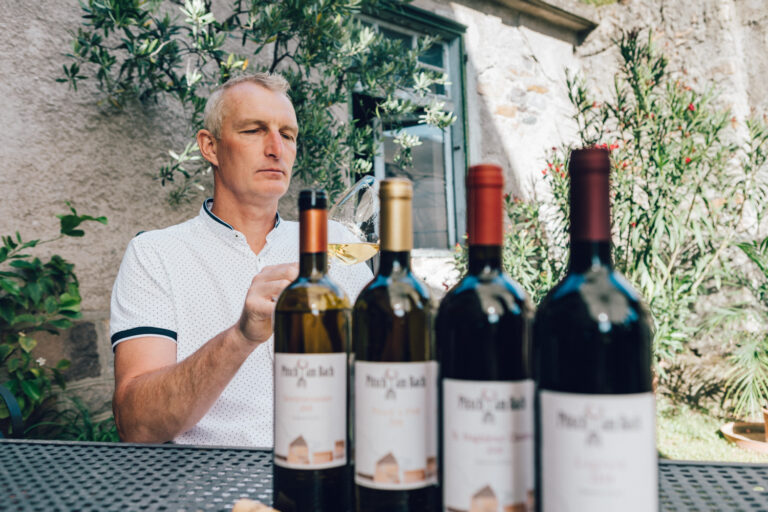
Today, Paul Schweigkofler, together with his daughter Lena—who has just completed her enology degree—manages the winery, maintaining a strong commitment to natural vineyard practices and traditional winemaking. Their philosophy is that wine is primarily made in the vineyard and only refined in the cellar.
They own approximately 3.4 hectares of steep, southwest-facing vineyards—so steep that a chain handrail has been installed in the most challenging section to ensure safety. Manual labor is essential due to limited mechanization, often with tools that Paul has modified or built himself. Indigenous grape varieties play a central role, including Schiava and Lagrein, as well as Gewürztraminer, Moscato Giallo, and rare local varieties such as Blaterle. Bottling is a recent step for the estate, with a very limited annual production of around 3,500 bottles.
Deeply rooted in history, family tradition, and place, Pitsch am Bach remains a true artisanal farm, representing a continuous and personal link between Bolzano’s winemaking heritage and its present-day expression.